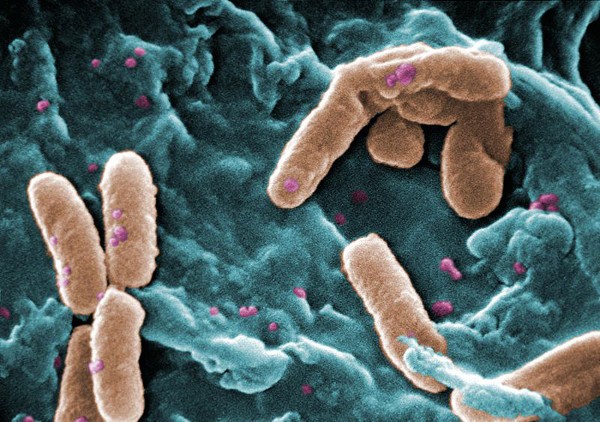
Seemingly rare in occurrence, ‘combinatorial communication’ has been speculated a cognitively complex process, and thus considered an evolutionary forerunner of the human language. Researchers have now challenged this view by showing that such communication strategies exist even amongst unicellular organisms, casting a new perspective on the evolution of language.
The process of combining two signals with distinct meanings to generate a third signal that has a completely different meaning is a hallmark of the human language. Humans have evolved to utilize composite signals as an advantageous and efficient means of communication. Considering the ease with which emotions can be expressed by means of composite signals, ‘combinatorial communication’ is surprisingly rare in nature. Excepting the example of the putty-nosed monkeys, there are hardly any evidences for the existence of such a communication system in the animal kingdom. This rarity led to the belief that combinatorial communication exhibited by non-human primates could be the precursor of linguistic communication.
Scott-Phillips et al. have now replicated an experiment, which was previously used to demonstrate combinatorial communication in putty-nosed monkeys, in the bacterium Pseudomonas aeruginosa. Bacterial cells utilize the quorum-sensing (QS) system to monitor their external environment and to communicate with each other. Using chemical signals, bacteria alter gene expression based on the environmental cues.
Two well-studied signaling molecules of P. aeruginosa thus formed the basis of their study. Through their cognate receptors, these molecules regulate distinct gene expression patterns. When combined, one would expect to obtain an expression that is a sum of the effect of the two molecules. However, the researchers observed an interestingly novel expression pattern, which led them to suggest that combinatorial communication may indeed be widely present in nature.
Instead of considering the implications of superficial observations of animal communication systems, they propose that the precise cognitive mechanisms that regulate the communication process should be dissected across species to truly study the evolution of human language.
Cover image: Pseudomonas aeruginosa (Wikimedia).
References
Orginal article: Combinatorial Communication in Bacteria: Implications for the Origins of Linguistic Generativity, PloS One (2014)
Advertisement
Stats
- Recommendations +3 100% positive of 3 vote(s)
- Views 3252
- Comments 2
Recommended by

Recommended
-

Aleksander Benjak
Scientific Officer | NCCR Molecular Systems Engineering, University of Basel
Also:
- Web Developer | Science HR
- Web Developer | Science Simplified
- Co-Founder and Web Developer | Life Science Network gGmbH
-

Johannes W. Dietrich
Adjunct Professor | Medical Faculty, Ruhr University Bochum
Also:
- Elected member | Leibniz Society of Sciences
- Member | Center for Thyroid Medicine Ruhr University Bochum
- Head | Zentrum für Diabetes-Technologie (ZDT) Blankenstein Hospital
- Head | Zentrum für seltene endokrine Erkrankungen / Centre for Rare Endocrine Diseases Ruhr University Bochum
- Head | Diabetes Centre Bochum/Hattingen Blankenstein Hospital
- Head | Sektion Diabetologie, Endokrinologie und Stoffwechsel Ruhr University Bochum
- Collaborator | CeSER - Centrum für Seltene Erkrankungen (ZSE) der Ruhr-Universität Bochum und der Universität Witten-Herdecke Ruhr University Bochum
- Medical Advisor | Thyroid UK
- Clinical cooperation partner and statistical advisor | KreLo Medical Diagnostics
- Cofounder, Shareholder | INSTRUCT AG
-

Alen Piljić
Managing director | Life Science Network gGmbH
Also:
- President | Research Elements Association
Post a comment
Comments
-

Alen Piljić Wednesday, 21 May 2014 - 19:31 UTC
Fixed the link in admin. Thanks Johannes!
-

Johannes W. Dietrich Wednesday, 21 May 2014 - 19:05 UTC
Unfortunately, the full text link to the paper in PLoS One doesn't work. The correct URI is http://dx.doi.org/10.1371/journal.pone.0095929 .