Some of the latest science news from around the globe.
Anti-tuberculosis drug lead developed through open source method
One of the biggest challenges in fighting microbial diseases is discovering new drugs. As the incidence of drug resistance increases, the need for new antimicrobials correspondingly increases. Identifying and synthesizing a novel therapeutic agent is understandably a difficult task. We had previously posted an article about the Todd lab from the UNSW, Australia, and their practice of "Open Science". In their latest open source-based endeavour, the researchers from this lab have successfully synthesized1 an anti-tuberculosis compound. The starting point of the study was a generous set of ‘open data’ made available by the healthcare giant GlaxoSmithKiline (GSK). To expedite drug discovery, the structures of 177 potential anti-TB leads were published online, and from this pool a few compounds belonging to the ‘Spiros’ family were later established to be effective against mycobacteria and are considered potent leads; their synthesis is, however, unclear. The researchers from UNSW have now published a technique which helps generate these Spiros efficiently, demonstrating the value of “collaborative open source philosophy”.
An estimation of plastic pollution in our oceans
Pollution is a bane of the modern human society, and plastic pollution poses a great threat to animals both on land and water. We do hear every now and then about plastic washing up on the beaches and massive plastic wastes floating in the seas. But how much of plastic is actually polluting our environment, especially the oceans? The results of a survey of diverse seas and oceans conducted via 24 expeditions between 2007 and 2013 estimates the current plastic pollution2 to a staggering five trillion pieces, weighing over 250,000 tons! This study is yet another reflection of the disastrous levels of pollution and the need for swifter actions on a global scale to tackle this drastic destruction of our environment.
What to do when your funding runs out?
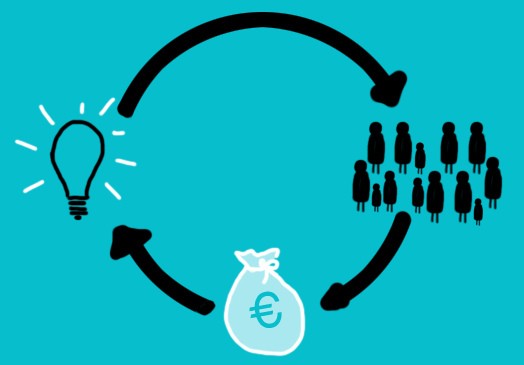
Crowdfunding is a popular method of raising money amongst artists and philanthropists, but is this an alternative platform for financing research? A new article3 published on PlosOne explores how popularity on social media can play a major role in helping scientist fund their research. Using a social experiment in which 159 scientists tried to raise money through crowdfunding, the study has identified factors that can influence the success of a research proposal in the eyes of the public.
Cover image: Crowdfunding (Flickr, Rosio Lara)
References
1. Badiola,K. et al., Efficient Synthesis and Anti-Tubercular Activity of a Series of Spirocycles: An Exercise in Open Science.PlosOne. DOI: 10.1371/journal.pone.0111782
2. Eriksen, M. et al., Plastic Pollution in the World's Oceans: More than 5 Trillion Plastic Pieces Weighing over 250,000 Tons Afloat at Sea. PlosOne.DOI: 10.1371/journal.pone.0111913
3. Byrnes, J. et al., To Crowdfund Research, Scientists Must Build an Audience for Their Work.PlosOne. DOI: 10.1371/journal.pone.0110329
Advertisement
Stats
- Recommendations +2 100% positive of 2 vote(s)
- Views 1635
- Comments 0


Recommended
-

Aleksander Benjak
Scientific Officer | NCCR Molecular Systems Engineering, University of Basel
Also:
- Web Developer | Science HR
- Web Developer | Science Simplified
- Co-Founder and Web Developer | Life Science Network gGmbH
-

Alen Piljić
Managing director | Life Science Network gGmbH
Also:
- President | Research Elements Association