Lateral gene transfer from bacteria to human somatic cells is enriched in cancer samples, shows a recently published study by University of Maryland researchers.
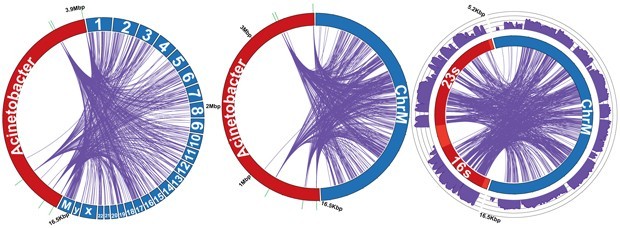
There are 10× more bacterial cells in the human body than there are human cells that are part of the human microbiome. Many of those bacteria are in constant, intimate contact with human cells. In a recent study, the scientists from University of Maryland sought to establish if bacterial cells insert their own DNA into the human genome. Such random mutations could cause disease in the same manner that mutagens like UV rays from the sun or chemicals in cigarettes induce mutations. They detected the integration of bacterial DNA in the human genome more readily in tumors than normal samples. In particular, extensive amounts of DNA with similarity to Acinetobacter DNA were fused to human mitochondrial DNA in acute myeloid leukemia samples. They also identified specific integrations of DNA with similarity to Pseudomonas DNA near the untranslated regulatory regions of four proto-oncogenes. This supports the hypothesis that bacterial integrations occur in the human somatic genome that may potentially play a role in carcinogenesis. Further study in this area may provide new avenues for cancer prevention.
This is a modifed author's summary. Full article can be read here.
Copyright: Creative Commons Attribution License.
Cover image: Modifed figure from the publication showling Acinetobacter-like integrations into the genome of acute myeloid leukemia samples.
References
Riley DR, Sieber KB, Robinson KM, White JR, Ganesan A, et al. (2013) Bacteria-Human Somatic Cell Lateral Gene Transfer Is Enriched in Cancer Samples. PLoS Comput Biol 9(6): e1003107. doi:10.1371/journal.pcbi.1003107.
Advertisement
Stats
- Recommendations n/a n/a positive of 0 vote(s)
- Views 1516
- Comments 0