A study led by Umeå University associate professor Paolo Medini sheds new light onto the unknown processes on how the brain integrates the inputs from the different senses in the complex circuits formed by molecularly distinct types of nerve cells.
One of the biggest challenges in Neuroscience is to understand how the cerebral cortex of the brain processes and integrates the inputs from the different senses (like vision, hearing and touch) to control for example, that we can respond to an event in the environment with precise movement of our body.
The brain cortex is composed by morphologically and functionally different types of nerve cells, e.g. excitatory, inhibitory, that connect in very precise ways. Paolo Medini and co-workers show that the integration of inputs from different senses in the brain occurs differently in excitatory and inhibitory cells, as well as in superficial and in the deep layers of the cortex, the latter ones being those that send electrical signals out from the cortex to other brain structures.
“The relevance and the innovation of this work is that by combining advanced techniques to visualize the functional activity of many nerve cells in the brain and new molecular genetic techniques that allows us to change the electrical activity of different cell types, we can for the first time understand how the different nerve cells composing brain circuits communicate with each other”, says Paolo Medini.
The new knowledge is essential to design much needed future strategies to stimulate brain repair. It is not enough to transplant nerve cells in the lesion site, as the biggest challenge is to re-create or re-activate these precise circuits made by nerve cells.
Paolo Medini has a Medical background and worked in Germany at the Max Planck Institute for Medical Research of Heidelberg, as well as a Team leader at the Italian Institute of Technology in Genova, Italy. He recently started on the Associate Professor position in Cellular and Molecular Physiology at the Molecular Biology Department.
“By combining cell physiology knowledge in the intact brain with molecular biology expertise, we plan to pave the way for this kind of innovative research that is new to Umeå University and nationally”, says Paolo Medini.
Content: Umeå University press release (modified).
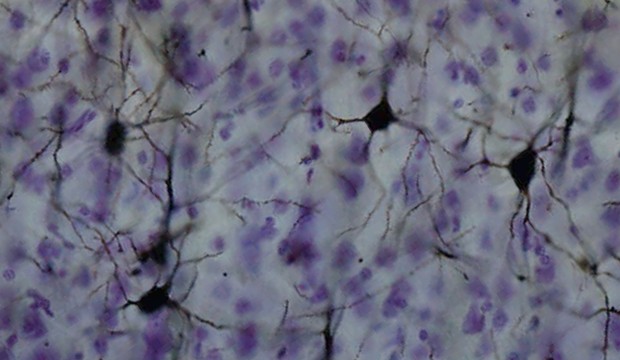
Cover image: Golgi-stained neurons in the cortex (Wikipedia).
References
Olcese U, Iurilli G, Medini P. “Cellular and synaptic architecture of multisensory integration in the mouse neocortex”. Neuron. 2013 Aug 7;79(3): 579-593.
DOI: 10.1016/j.neuron.2013.06.010
Advertisement
Stats
- Recommendations +2 100% positive of 2 vote(s)
- Views 982
- Comments 0


Recommended
-

Aleksander Benjak
Scientific Officer | NCCR Molecular Systems Engineering, University of Basel
Also:
- Web Developer | Science HR
- Web Developer | Science Simplified
- Co-Founder and Web Developer | Life Science Network gGmbH
-

Alen Piljić
Managing director | Life Science Network gGmbH
Also:
- President | Research Elements Association